Coming Back to Build: AI, Regeneration, and a Regen Builders Cohort? 👷🧱
John Ellison here. Stepped back in 2024, watched ReFi DAO evolve in a beautiful way... Now I'm back with something new: vibe coding. AI just democratized building—and I want to run a cohort for ReFi builders ready to ship regen solutions fast. Interested? Hit me up!

Hey ReFi DAO fam!
It's been a while... I just got off a long conversation with Monty about ReFi DAO's future and I'm excited to be back in touch.
For those who don't know me: I'm John Ellison, founder of ReFi DAO. I helped build this community alongside a bunch of amazing leaders starting in 2021, watched it grow into a global movement, and then in early 2024 I stepped back.
Took a sabbatical. Played music. Surfed. Traveled. Filmed a documentary.
And then I saw the same kind of massive wave of enthusiasm, capital and possibility emerging that I saw in ReFi back in 2021, but this time it was June 2025 and the buzz word was different:
Vibe Coding.
But before I get into what I've discovered in going down the Vibe Coding rabbit hole over the last six months, I want to step back and reflect upon what's happening the ReFi movement.
What I've seen emerging at ReFi DAO
When I stepped back from my role as Source Steward in early 2024, ReFi DAO was navigating bear market territory. The vision was clear, but the path forward was uncertain. Funding was tight. The market was changing.
What I've witnessed from the sidelines has been remarkable.
The network didn't just survive—it evolved. From 30+ active Local Nodes deploying capital around the world, to pioneering new funding mechanisms that actually work. From the Mediterranean coastlines to African farmland, and from Latin American rainforests to European urban hubs, our nodes have been solving real problems in real places.
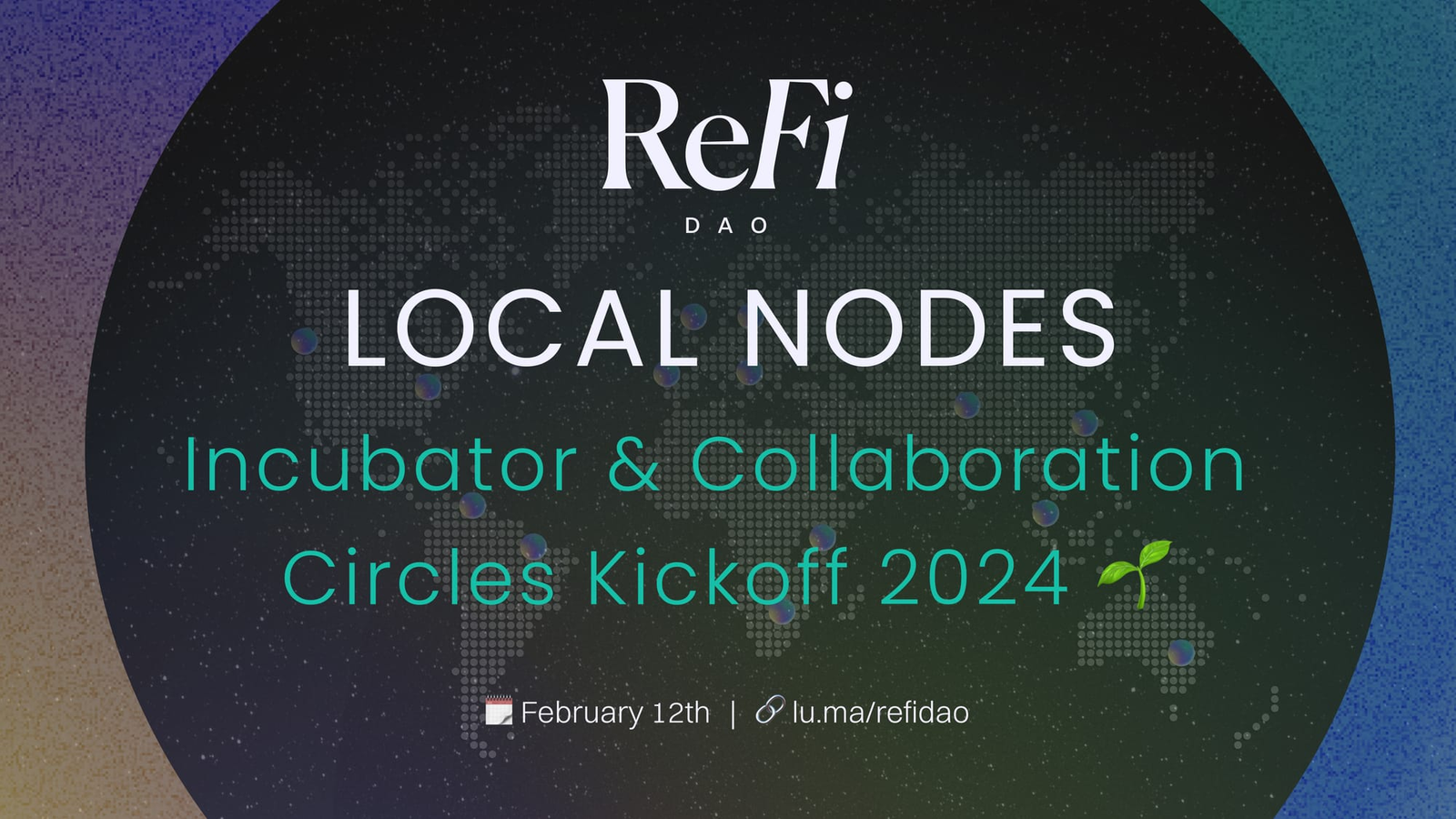
The Local Node Incubator launched in February 2024, providing structure and support for communities to build place-based regenerative infrastructure. That same energy carried through to launching Season 4 of the ReFi Podcast, continuing to amplify voices from across the movement.
Then came Regen Coordination—a coordination layer that proved we could fund regenerative work at scale. The Genesis Round in GG21 was just the beginning. By GG22, we'd evolved to the Regen Citizens round, and by GG23 in early 2025, we were running parallel regional rounds in the Mediterranean and Rio de Janeiro while pioneering the AI + ImpactQF methodology. Together, these rounds have allocated over $159,000 in capital across programs, testing new mechanisms for Web3 grant funding.
BioFi emerged as the next frontier.
The BioFi Pathfinders Round in late 2024 marked the first-ever bioregional grant round on Gitcoin—$8,813 raised from 1,096 contributions, matched with $55,000 from sponsors, onboarding 14 bioregional teams to Web3 for the first time. ReFi Mediterranean, ReFi Costa Rica, and ReFi Uganda proved that regenerative finance could support place-based organizing at bioregional scale.
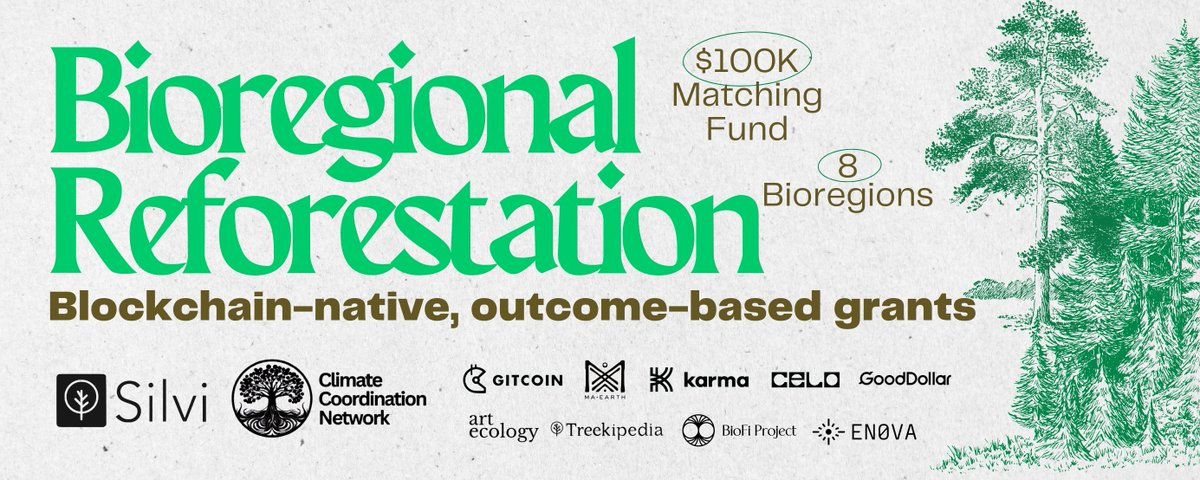
Silvi Protocol took it further.
Silvi Protocol took it further in 2025 with $100,000 distributed across eight bioregions through Bioregional Reforestation Grants—smart contracts triggering conditional payouts based on verified planting milestones. 65% upon verified planting by native stewards, 35% upon demonstrated survival. Cryptographic attestations backing actual outcomes, not promises.
Throughout 2025, the experiments continued: the Ethereum Localism research and Localism Fund launch, the Prosperity Pass bringing onchain reputation and rewards, Regen Haus at Edge City Patagonia creating regenerative residencies. And behind all of this, the State of the Network Research and ongoing development of ReFi DAO 2.0 laying groundwork for what comes next.
This is what I'd been hoping for when we started ReFi DAO: sophisticated infrastructure for impact, not just idealistic evangelism about web3. The movement I helped start has matured into something far more powerful than I could have imagined.
Massive credit to the Local Node leaders on the ground, to Monty, Luiz and the core team, and to the funders who stepped in to support this vision—Gitcoin, Celo Public Goods, Ma Earth, Kevin Owocki, as well as Samantha, Tyler, Djimo and many others.
But right now, ReFi stands at a familiar crossroads.
Funding is drying up.
The market is changing.
So what do we do as a community and a movement as a whole in this time?
It's my humble opinion that Vibe Coding could provide an enormous amount of leverage for local node leaders and regen founders who want to build regenerative solutions and don't want to wait for capital.
For more on this, read my latest post: The Mirror We're Building: Why AI's Golden Age Demands a Reckoning
What I've Been Building
During the sabbatical, I watched something shift in the tech landscape that I couldn't ignore: AI went from "interesting tool" to "fundamental restructuring of who gets to build software."
Claude Code dropped. Cursor evolved. Suddenly people with zero traditional coding background were shipping real products—functional apps, complex systems, things that would have taken teams of engineers months to build.
This wasn't hype. This was actual democratization of building. The kind of democratization that web3 set out to achieve, but with a different stack.
And I realized: if we're serious about regeneration at scale, this might just be the highest point of leverage we've ever had to build new regenerative systems.
Not web3 infrastructure (we have that now).
Not carbon markets (struggling right now).
Not even new funding mechanisms (critical, but we have plenty).
The bottleneck has been the ability to build solutions.
And AI just removed it.
Why Vibe Coding Changes Everything for ReFi
At this stage of the movement you can't use AI tools to build production grade web3 products with smart contracts, but you can build full-stack applications—and while for some this might seem like a 'no-go', to me, it's a major milestone and represents a shift in the entire model of building software and digital solutions in the first place.
The old model: You have a problem. You need a developer. You raise money to hire the developer. They take months to build. By the time you ship, the problem has evolved. Repeat.
The new model: You have a problem. You learn to vibe code. You build a prototype in days. You test it with your community. You iterate in real time. You ship something that actually works for the people who need it.
This matters for regeneration because many ReFi problems can be solved with technology other than blockchain and some of them without technology at all.
AI gives small teams and individual builders the leverage to prototype solutions at the scale and speed those problems demand. Indigenous communities preserving biodiversity? They need tools to verify their stewardship and unlock capital.
AI can help build those tools and create automated processes to tell the story about what's happening on the ground to engage more stewards, more donors and more conscious members of society who want to protect the rainforest.
Reforestation projects struggling with funder trust? They need transparent tracking systems. AI can help create them. Is it going to run on Hedera's Guardian at first? Probably not... is good enough better than not at all? Definitely.
Local cooperatives trying to coordinate supply chains? They need accessible interfaces and automation. AI can build that.
The pattern I keep seeing: The people closest to the problems usually don't have the technical capacity to build solutions. The people with technical capacity often don't understand the problems deeply enough to build the right solutions.
Vibe coding collapses that gap.
The Dangerous Part (That Nobody Seems to Want to Talk About)
Despite the power of vibe coding, there's the uncomfortable truth that I can't ignore:
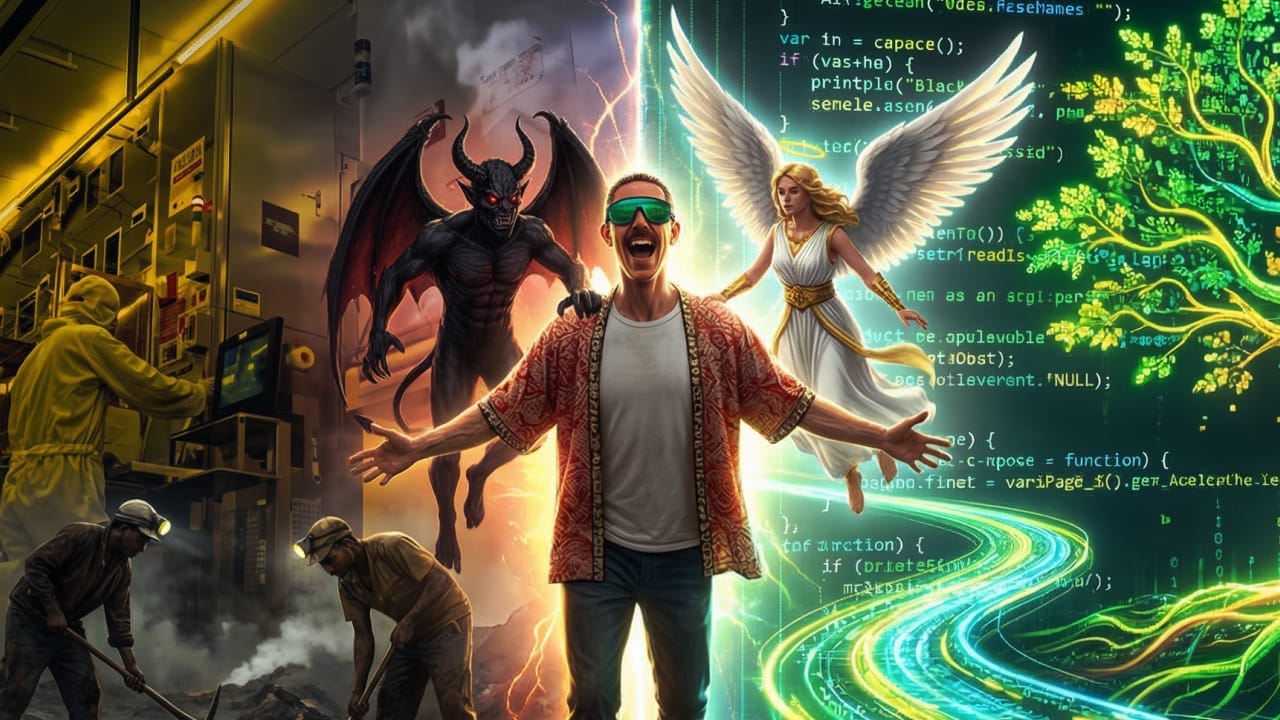
AI isn't neutral. It amplifies intention. And right now, the dominant intention in tech is still extraction over regeneration.
Most people building with AI are creating the same meaningless products—just with better UX and faster shipping. More SaaS dashboards. More optimization of broken systems. More widgets for people who already have everything.
Meanwhile, the environmental and social costs of AI are accelerating at planetary scale:- Data centers consuming entire nations' water supplies- Rare earth mineral extraction for chips and hardware- Modern slavery in data labeling operations- Geopolitical control concentrated in a handful of companies
This isn't hypothetical. It's happening right now.
So we have a choice
Use AI to accelerate the same extractive patterns that got us into this mess—just faster and with better UX.
Or use AI to build tools that actually restore ecosystems, strengthen communities, and create systems of reciprocity and care.
The technology is neutral. Our intentions aren't.
Introducing: My New Show
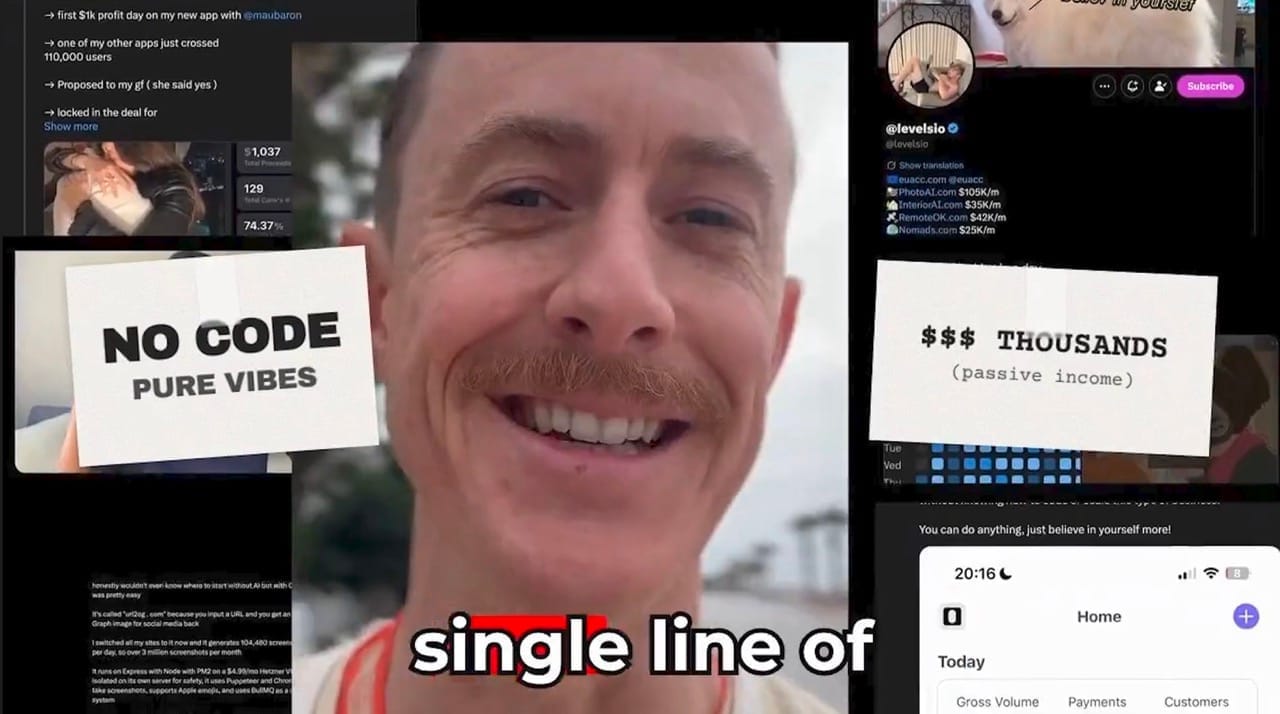
I just launched a new podcast (and YouTube series).
It's where I'm making sense of what comes next—exploring AI, vibe coding, regenerative systems, indigenous wisdom, and the hard questions most people in the space don't want to face.
Episode 1 just dropped: "The Dangerous Truth About Vibe Coding (Full Breakdown)". It covers:
- How AI is democratizing software development (and why that's both unprecedented opportunity and colossal danger)
- The resource consumption crisis nobody wants to discuss- What it means to build with intention when you have exponential leverage
- Two paths forward: extraction or regeneration
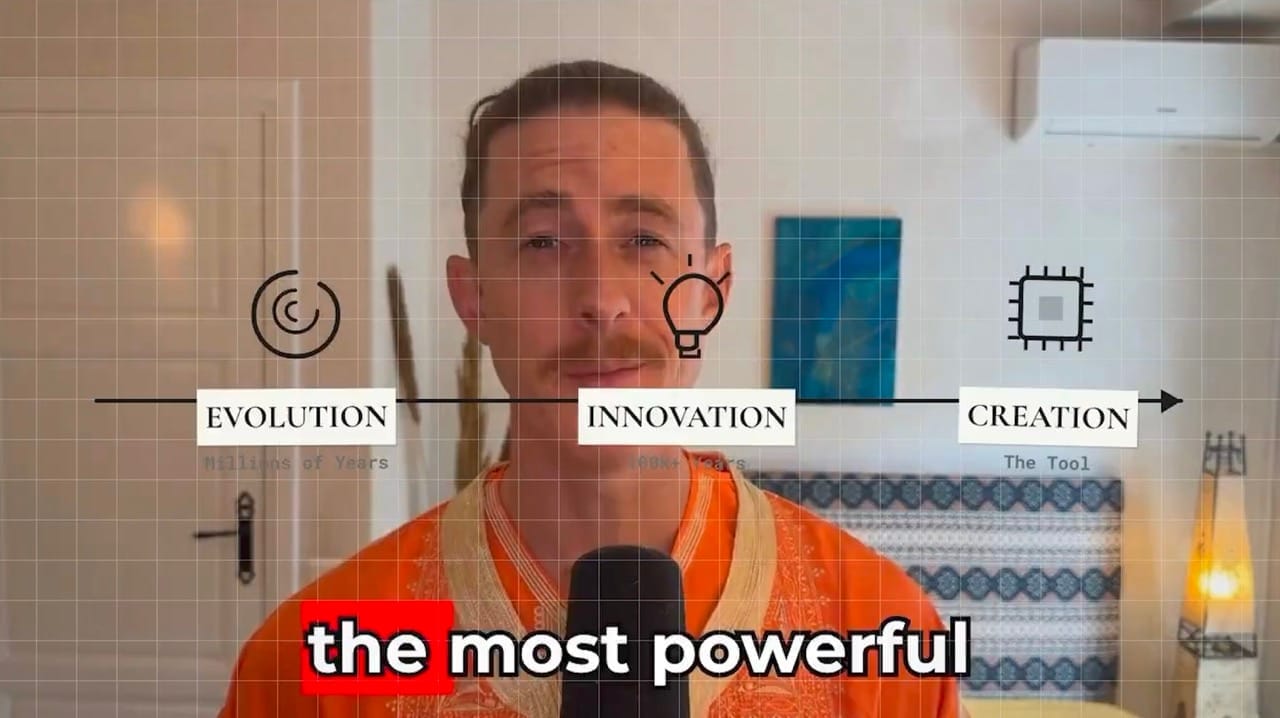
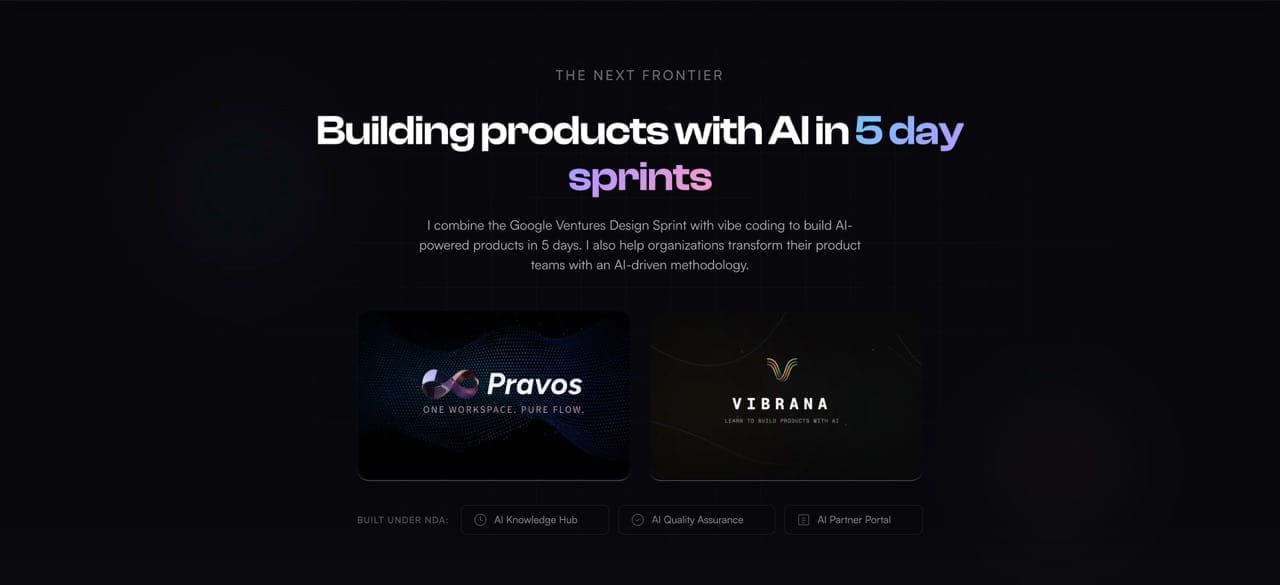
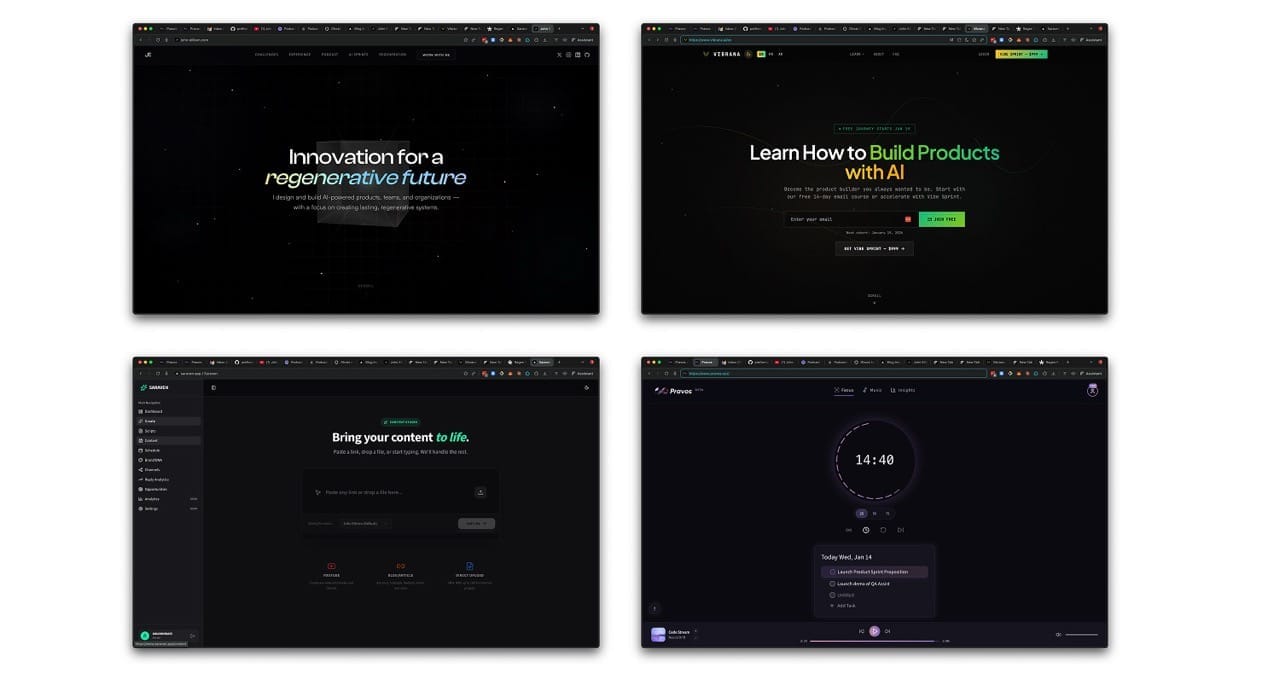
I'm trying out a new narrative style, going deep into video editing and experimenting with a bit of humor. I'm also building Pravos and Vibrana in public, teaching founders and PMs how to build, and interviewing builders who are using AI in service of life!
If that's you and you'd like to setup a time to speak, hit me up on X or LI!
What I'm seeing is massive. So much is happening so fast. The tools have gotten so powerful. Already, in the last three months I have:
- Built a deep work productivity platform called Pravos
- Taught 12 impact founders how to build products with AI at Vibrana
- Built an all-in-one content automation suite called Saraven
- Built three working products for a client in just two weeks
Future episodes will feature:
- Builders using AI to preserve indigenous cultures
- Smart neighborhoods engineers orchestrating entire businesses with AI
- Optimizing reforestation and creating trust between funders and communities
- Tactical deep dives: how to actually build with Claude Code, agent workflows, real products
- Live vibe coding sessions with friends in the space (hit me up!)
New episodes drop every Tuesday (ish)
You can watch Episode 1: Vibe Coding with Claude The Dangerous Truth...
Or subscribe wherever you listen to podcasts: Spotify, Apple Podcasts
An Invitation: ReFi Builders Cohort
Here's what I'm proposing: I want to run a cohort specifically for ReFi builders who want to learn vibe coding ideally with one web3 partner and one AI partner to sponsor the program.
Not a course. Not a lecture series. A hands-on, build-together experience where we:
- Learn to use Claude Code, Cursor, and AI agent workflows
- Build actual products that solve real regenerative problems
- Ship real products, drive on-chain activity and real-world adoption
- Support each other through the learning curve
- Go to market using the latest social engineering and growth strategies
If this resonates, please get in touch!
If there's enough interest and support, I'd love to find a way to make this happen!
What I've Learned (And Why I'm Back)
My sabbatical taught me a few things.
The highs of startup life aren't as great as you think. The lows aren't as bad as you fear. What matters is the life you live, who you live it with, and the sense of purpose that gets you up in the morning.
Regeneration isn't a niche. It's the only viable path forward. Every other approach is just rearranging deck chairs on the Titanic.
The tools to build a regenerative future are here. Right now. In our hands. The question isn't "can we build it?" The question is "will we?"
What matters now is building in service of life. Using the most powerful tools we've ever had to restore, not extract. To serve communities, not shareholders.
I guess it's the same narrative as what brought me into ReFi in the first place, but with a new set of eyes and a new set of tools that makes a whole new world suddenly possible.
Let's Build Differently
If you've been following ReFi DAO since the early days, you know we've always been about systems change. About building infrastructure for a regenerative economy. About creating tools and frameworks that serve life.
AI is the next frontier of that work.
We're at a fork in the road. One path leads to AI-accelerated extraction.
The other leads to regeneration and planetary abundance.
Let's choose wisely.
Peace ✌️
John
PS — I'll be in Morocco from Feb 1... If you ever want to jam on building, surfing, or just hanging by the ocean, hit me up!
PPS — For those asking: yes, I'm getting more connected to ReFi DAO and the regenerative ecosystem over the coming months!
PPPS — If you want to start your vibe coding journey check out Vibrana 👇